
Pennington County Arrest Warrants Explained
An arrest warrant is a judge's order to take someone into custody. That is the whole of it. Minnesota rules prefer a summons first. A warrant only comes when an exception fits. Those exceptions include a likely failure to respond, an address that cannot be found, or a need to prevent imminent harm. In Pennington County, the district court issues the order, and the sheriff's office serves it. The county court page lists the court's address and hours for anyone who needs to appear there in Pennington County.
How a Pennington County Arrest Warrant Begins
Every Pennington County arrest warrant starts as paperwork. The first document is a complaint, and Minnesota Rule 2 spells out what it must contain: a written, signed statement showing probable cause, naming the offense, and citing its statutory basis. Support can come from affidavits, sworn testimony, or other documents. From there a judge reviews the complaint and everything behind it. If the judge finds probable cause, Rule 3 lets the court issue a summons or a warrant. That call belongs to the judge alone, and a prosecutor's request cannot take its place.
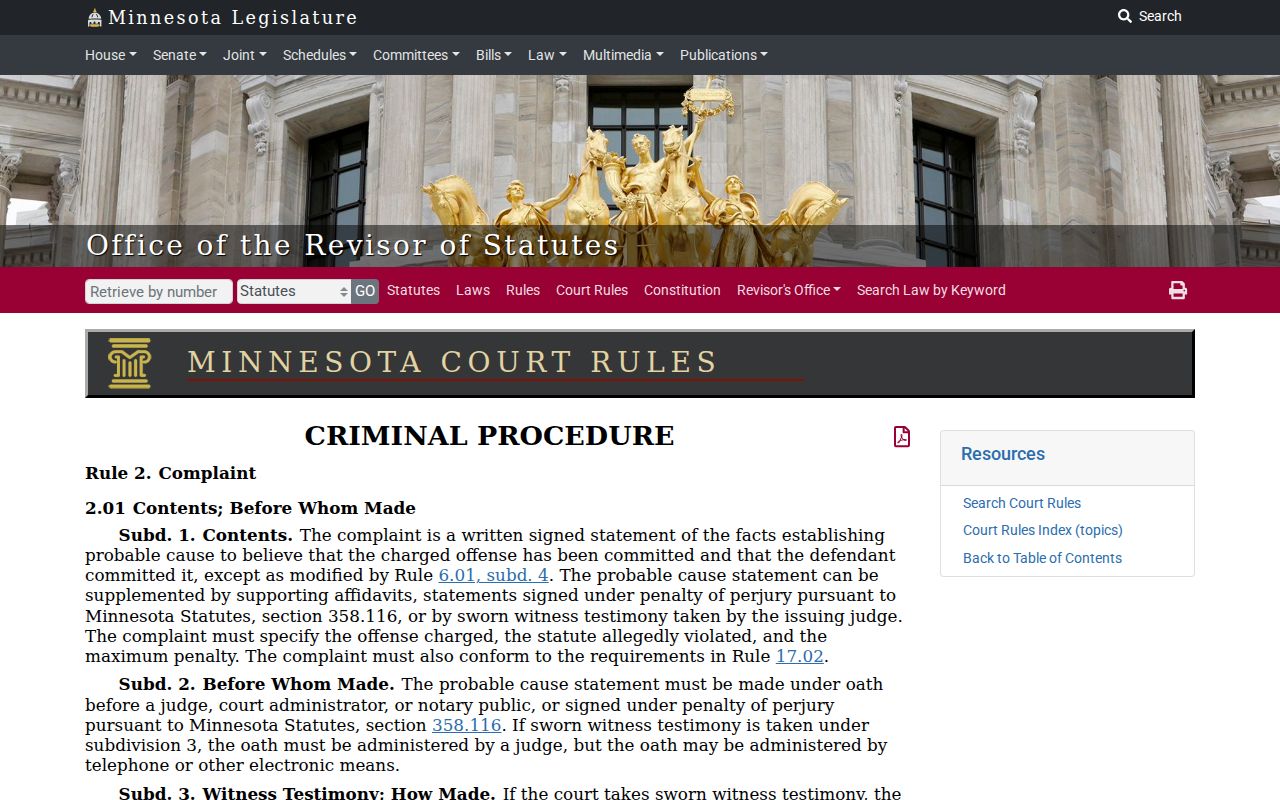
That rule is where the complaint standard comes from. The facts of any one Pennington County case sit in the court file, not on a county web page.
Inside a Pennington County Arrest Warrant
A warrant carries a defined set of fields. In a given Pennington County case some fields may be restricted, and none belong copied onto another website.
| Court and county | Pennington County District Court. |
|---|---|
| Case parties | The State of Minnesota and the person named in the complaint. |
| File number | The district-court case identifier used in MCRO. |
| Offense | The charge and its statutory basis, with the classification where public. |
| Issuing judge and issue date | Who signed the order and when. |
| Bail and release conditions | Any amount and conditions set. No public county schedule was located. |
| Service and return | The agency directed to execute the order, plus any return event. |
| Next appearance | The court date that follows an arrest or a voluntary appearance. |
A case can be public while its warrant detail stays sealed. Read the Pennington County court register first, then ask Court Administration what it can confirm.
Arrest Warrant vs Search Warrant in Pennington County
Both orders come from a judge, yet they do very different jobs. An arrest warrant names a person. A search warrant describes a place or a thing. Minnesota's search-warrant statute demands probable cause backed by affidavit and a particular description of what may be searched and seized. It creates no list of people, so a Pennington County search warrant should never be read as an arrest record.
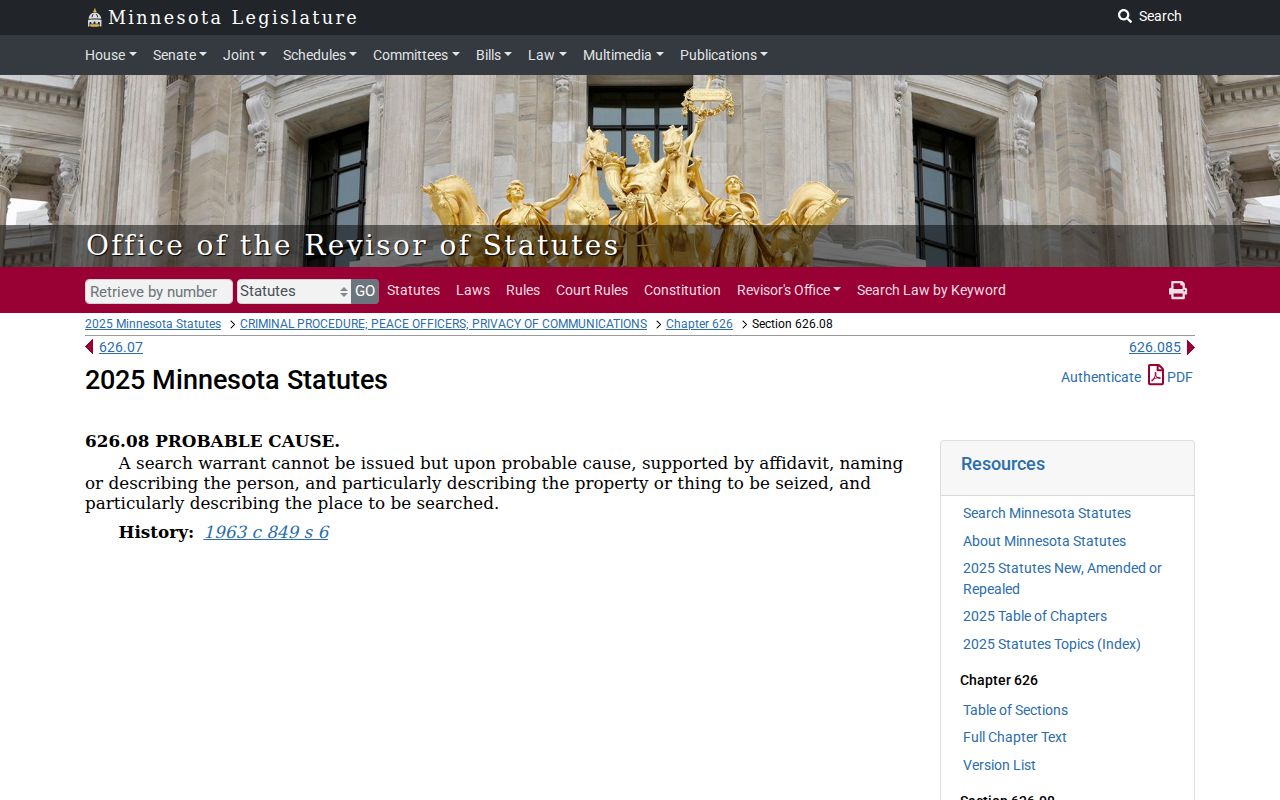
The difference matters on a docket. A search-warrant entry concerns evidence, not a Pennington County arrest warrant for a person.
Serving Arrest Warrants in Pennington County
The sheriff's deputies carry a broad load across Pennington County: warrant service, transports, courtroom security, patrol, and civil process. Civil process sits apart, and a civil summons is not an arrest warrant. Within their own authority, Thief River Falls Police can serve or encounter a warrant too, and the county dispatch center backs up the State Patrol and other agencies. If the case began with a city citation or a city arrest, ask that agency for its record route, then confirm the court case with Court Administration. Note: the sheriff's office lists no dedicated warrant-unit email or public warrant counter, so the general sheriff number is the working contact.
After a Pennington County Arrest Warrant Is Served
Once a person is in custody, the case moves to booking and then to court. The standard appearance-warrant form directs that the person go before a judge without unnecessary delay, and no later than 36 hours after arrest or as soon as a judge is available. Release conditions come next. The Pennington County attorney's page names cash bond and surety bond locally, and the county publishes no bond schedule. Posting bond secures a release and an appearance route. It does not resolve the case. Note: custody status and warrant status in Pennington County change on different clocks, so ask which record you are looking at.
Comparing Arrest, Summons, and Bench Warrants
Pennington County cases move on three kinds of process. Which one a reader sees points to where the case stands.
| Process | How it starts | What it does |
|---|---|---|
| Summons | A complaint establishes probable cause | Orders the person to appear, without an arrest order |
| Arrest warrant | A complaint establishes probable cause and the rule's exceptions apply | Authorizes an arrest and an appearance before a judge |
| Bench or appearance warrant | A missed court date or compliance failure | Brings the person back into an open case |
A standard appearance-warrant form in Pennington County shows the fields a bench warrant uses, including the 36-hour appearance language.
Why a Pennington County Arrest Warrant May Stay Confidential
Minnesota treats arrest-warrant-index data as private until the person is in custody, served, or in court. An agency can release it when it finds a public purpose, but the default is silence. That rule shields active investigations, victims, witnesses, and people named in unserved process. So a county can answer truthfully while releasing nothing. Note: ask a records officer for the public portion of a record and for the exact authority behind any denial.
If There's an Arrest Warrant for You
Facing an active warrant in Pennington County? Call a defense attorney first. Counsel can pull the docket, explain the charge, tell you what the court has set, and ask about a recall or a planned surrender. Pennington County publishes two options for handling it. One is calling Court Administration at 218-684-7000 to arrange an appearance; the other is reporting and paying the bail amount so a court date can be issued. A fine-only warrant can be paid during regular hours. After hours, the sheriff's page directs you to the Sheriff's Office. Bring the case or citation number, and keep any receipt or order afterward. The county warrant overview lists the same steps.
Important: Get counsel before a voluntary appearance. An active warrant can also lead to arrest at a traffic stop or any police contact.
Federal Warrants Stay Outside Pennington County
Federal warrants never run through Pennington County. Those cases sit in the U.S. District Court for the District of Minnesota, and the nearest regional courthouse contact is Bemidji. None of that is a county warrant office. The U.S. Marshals Service handles federal warrant work through district offices and the North Star Fugitive Task Force. Federal dockets are searched in PACER. An entry may appear there unless it is sealed. Note: a county case search does not cover federal records, and a federal search does not cover Pennington County cases. Local access follows Minnesota Rule of Public Access 8. The rule allows inspection during regular hours and limits remote access to protected case types.
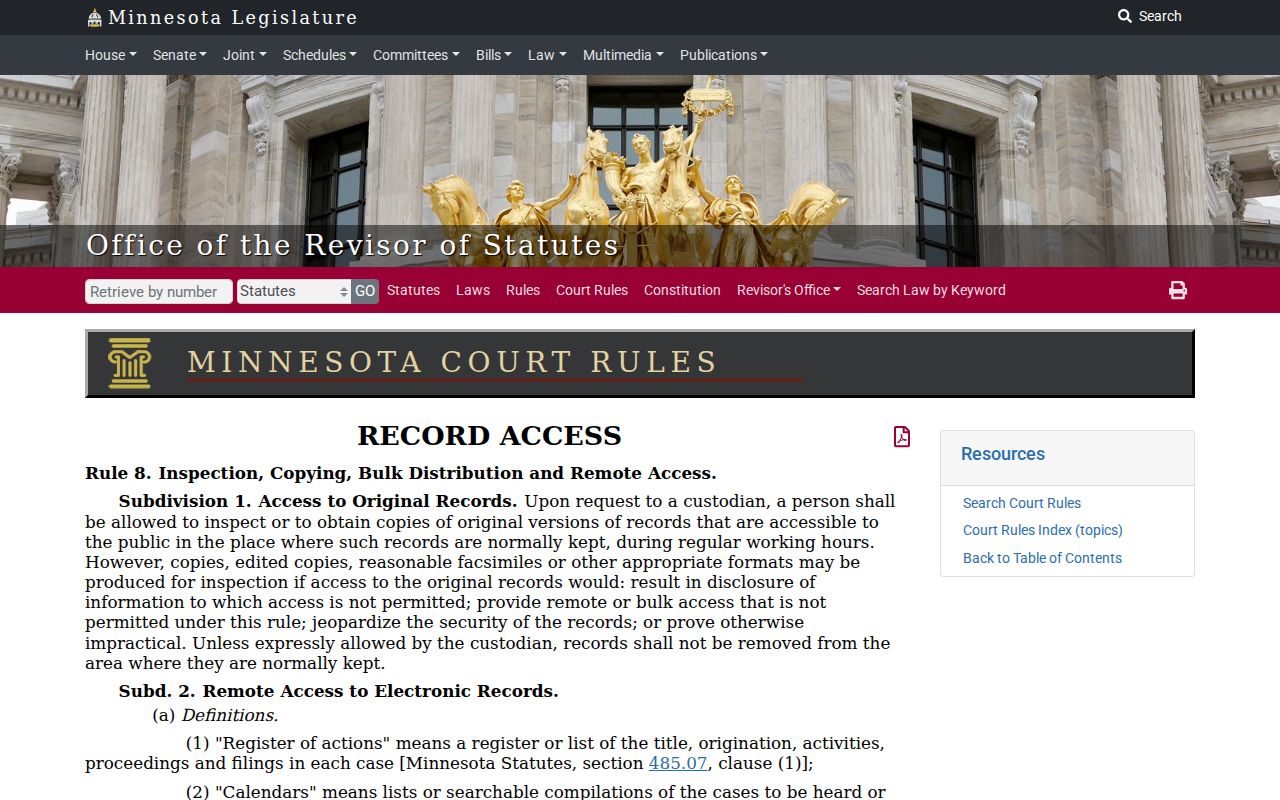
That rule covers the Pennington County state case only. A federal warrant follows federal access rules instead. Federal docket research runs through PACER, which carries a per-page charge and a document cap.
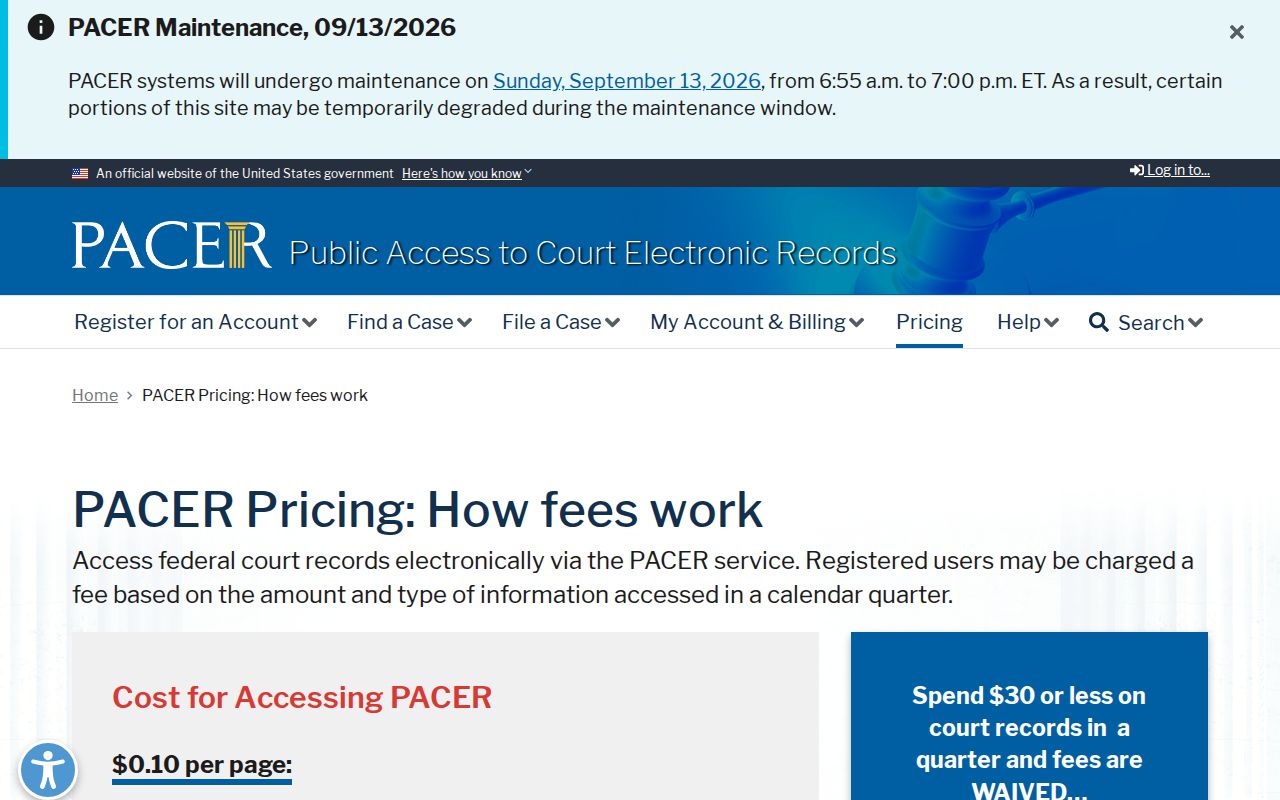
For a Pennington County reader, a docket search is research only, not a warrant confirmation, and it covers federal cases alone.