
Pennington County Traffic Warrants Explained
What turns a ticket into a traffic warrant? The court issues the order after a driver skips a required step, most often a missed appearance or an unpaid fine. It belongs to the court that handled the citation, not to any licensing agency. Minnesota's uniform ticket statute gives the citation real weight. The ticket serves as both the summons and the complaint in a single document, and it warns that failure to appear can lead to an arrest warrant, except in petty-misdemeanor cases where a different rule applies. Pennington County District Court handles traffic matters filed in the county. The county court page lists its address, phone, and hours.
How a Pennington County Traffic Warrant Starts
Minn. Stat. 169.99 sets the rules for the uniform traffic ticket in Pennington County. The ticket carries the required record components and acts as the summons and complaint together, so one document starts the case. From there, two paths split the outcomes. For most offenses, failing to appear can result in an arrest warrant. Petty misdemeanors run differently. A failure to appear there can be treated as a guilty plea and a waiver, unless the person appears within the statutory period and shows the failure was beyond their control. The statute lays out those requirements in full.
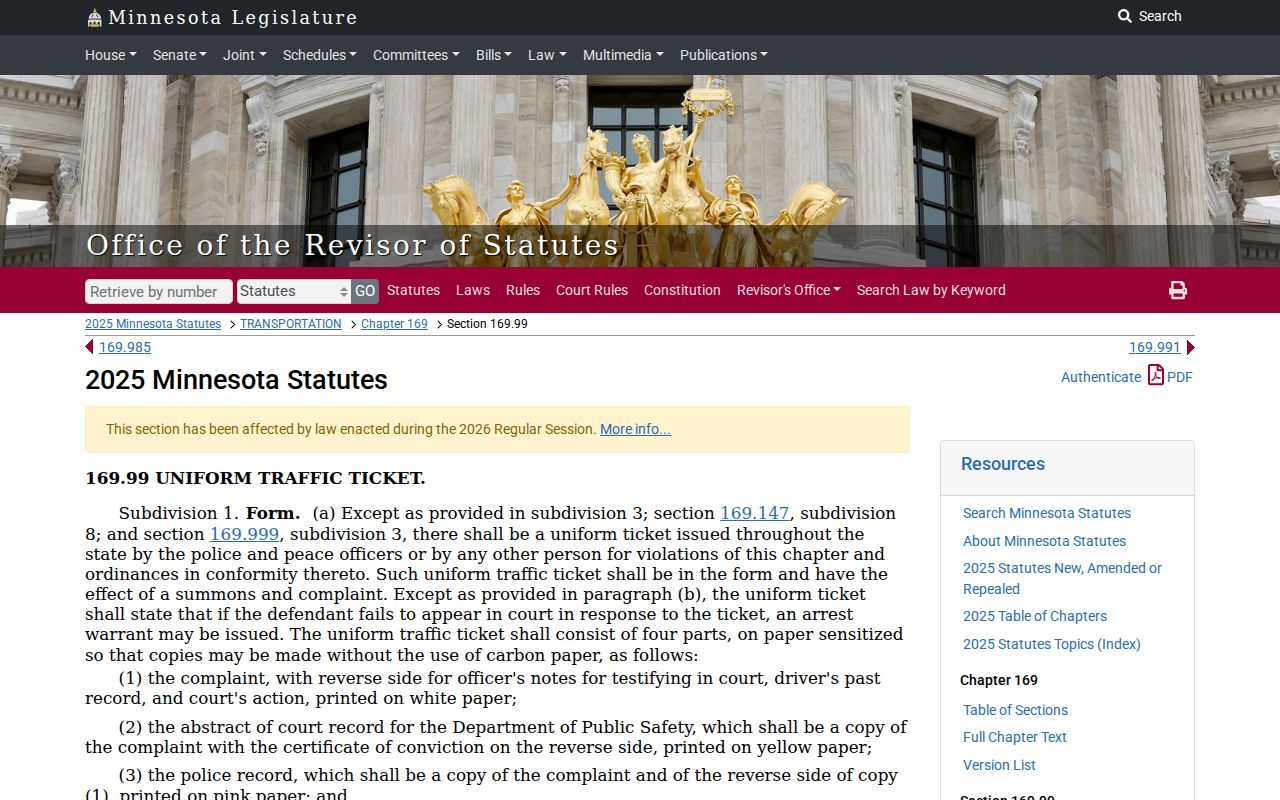
That statute is the source of the ticket's dual role in Pennington County. It is why a citation should never sit ignored.
Checking for a Pennington County Traffic Warrant
Pennington County posts no public traffic-warrant list. A warrant check here means working the channels that do exist and asking each one the right question.
- Read the citation for the case number, the filing county, and the deadline.
- Search the Minnesota Court Payment Center by citation or case number, entered without dashes or spaces, to see if the case is payable.
- Search MCRO by citation or case number to read the case events and any warrant event.
- Call District Court Administration at 218-684-7000 and ask whether a warrant exists, what type it is, and what the court requires next.
- Call the sheriff at 218-681-6161, or follow the county’s "I Have a Warrant" instructions, for after-hours payment or an appearance.
No public warrant search covers the state. So no single website can confirm a Pennington County traffic warrant on its own.
Paying a Pennington County Traffic Citation Is a Guilty Plea
The state's pay-a-fine page states the consequence plainly. Paying a Pennington County citation is a guilty plea. That is why a payment page is not a clearing tool: it settles a payable case and does not address every warrant. A criminal or non-payable matter needs the court.
Inside a Pennington County Traffic Warrant Record
A traffic file is smaller than a criminal one, yet its fields are specific. These are the Pennington County fields a reader needs first.
| Citation or case number | The case identifier. The payment search and MCRO both accept it. |
|---|---|
| Filing location | The county where the citation was filed, which is Pennington for a local stop. |
| Case type and status | Traffic or petty, with the current procedural status. |
| Charges | The offense and any statutory reference. |
| Balance and due date | What is owed and when, shown only when the case is payable. |
| Failure to appear | The event that can lead to a warrant, and the warrant event after it. |
The citation search help page explains the accepted format and the allowed characters.
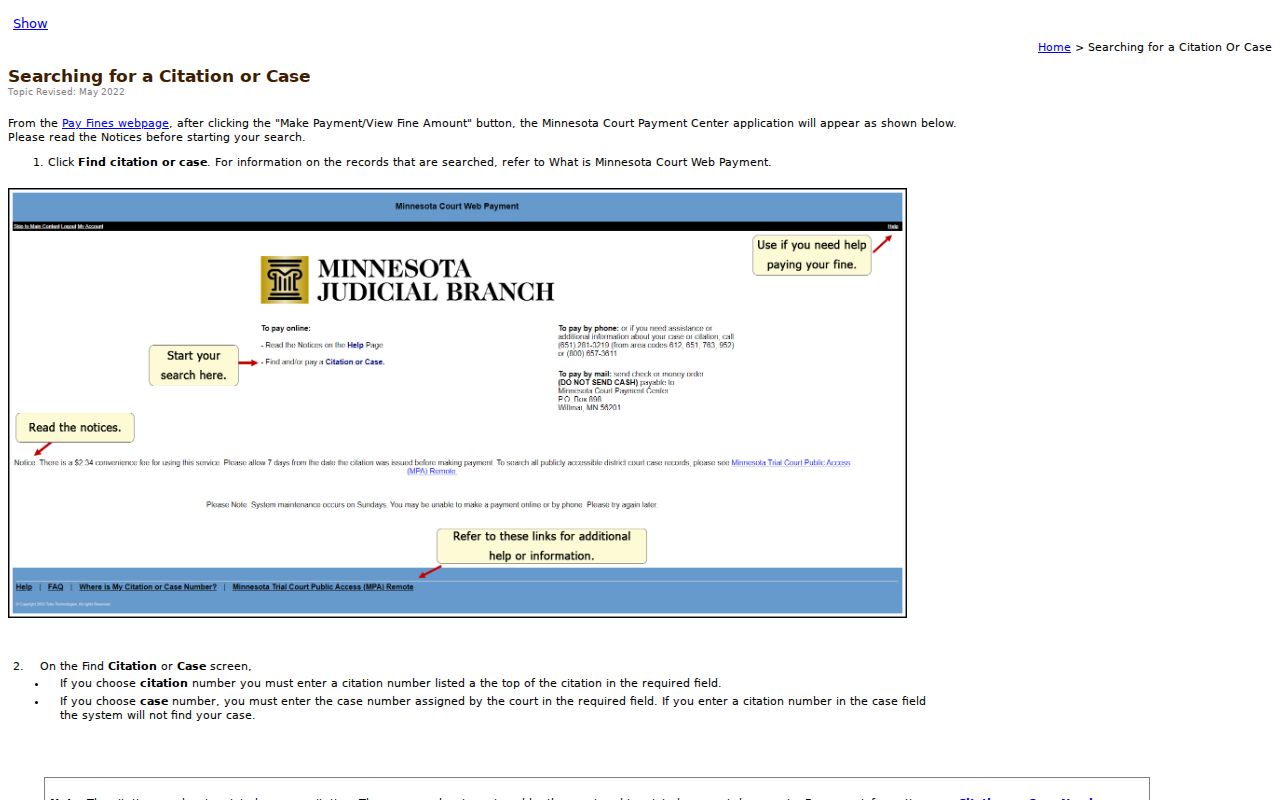
That Pennington County page shows the search controls only. It displays no sample person and no warrant status.
How the Clock Runs on a Pennington County Traffic Warrant
Two deadlines shape a Pennington County traffic case. The court payment center may need up to seven days after a citation before it can help. Separately, a citation generally must be paid or set for an appearance within 30 days from filing. Missing that window is what starts the escalation. Late penalties can follow. A failure to appear can produce a warrant, and the outcome turns on the offense level and the notice the driver received. Note: check the case before the 30-day deadline rather than after it, and keep the confirmation if you pay.
How to Pay or Lift a Traffic Warrant
Eligible Pennington County citations can be paid online through the court payment center. An automated line at 651-281-3219 or 800-657-3611 takes payment instructions. Staff do not take card numbers by phone. Mail works too. Send a check or money order payable to District Court Administration, PO Box 898, Willmar, MN 56201, with the citation information included. In person, pay at the district court that issued the citation. Qualifying cases may get a payment plan at $50 a month, and review of a plan can take 2 to 3 business days. State surcharges apply as well, including $12 for parking, $25 for some transit offenses, and $75 for other offenses. The processor adds a convenience fee. It is disclosed before payment, so the total is no surprise.
Caution: Payment settles a payable case. It does not lift a criminal warrant or a non-payable one, so confirm the case type with the court first.
A warrant already issued? Ask Pennington County Court Administration whether the matter is fine-only or needs an appearance.
What to Do When a Pennington County Traffic Warrant Appears
A missed date in Pennington County is recoverable. The order of the steps matters more than speed, so start with the court rather than a payment.
- Find the citation or case number and confirm the county.
- Call District Court Administration and ask whether a warrant is active and what type it is.
- Ask whether the case is payable or needs an appearance.
- Confirm the amount, the accepted payment methods, and the next court date.
- Keep the receipt or order, then recheck after the court’s update period.
Consult an attorney when the Pennington County charge sits above a petty misdemeanor or when a license notice is involved.
Traffic Warrants, FTA, and License Holds
A failure to appear, a warrant, and a license action are three linked events. They are not the same thing. Keeping them apart prevents the wrong assumption in Pennington County about what a payment fixes.
| Event | What it means | Where it lives |
|---|---|---|
| Failure to appear | A missed required court step in a traffic case | The court register |
| Traffic warrant | A court order that follows a missed appearance or unpaid fine | The court, with service by law enforcement |
| Sign-and-release warrant | A non-arrest order for eligible first failures to appear | The court and the sheriff's procedure under Minn. Stat. 629.415 |
| License action | A separate court report about a failure to comply with a citation | The driver's license record, not the warrant file |
Minn. Stat. 171.16 governs the court report behind a Pennington County license action. A license record is not a public warrant lookup. The statute page spells out the reporting duties the court must follow.
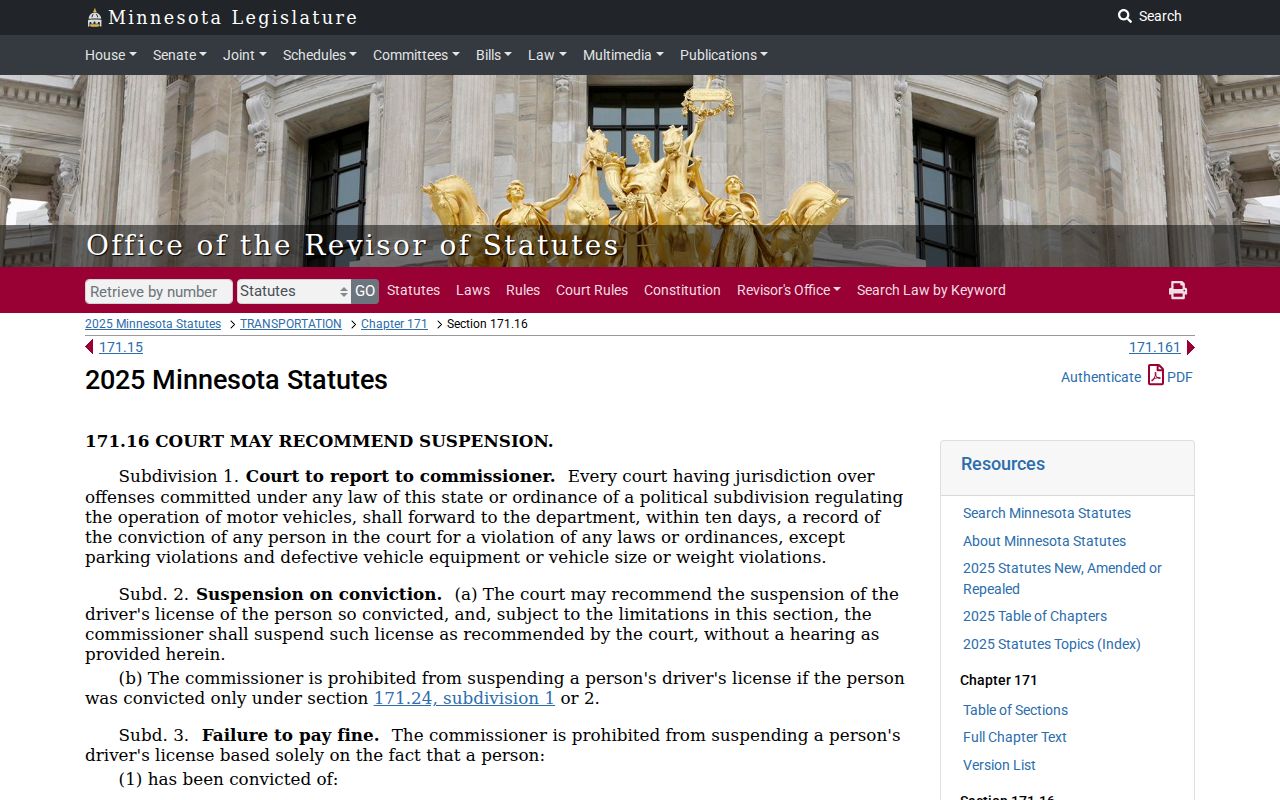
That statute is why. A Pennington County license notice and a warrant must be handled as two separate compliance questions, not one.
Why Traffic Payment Is Not a Pennington County Warrant Search
The payment center shows payable cases only. It is not certified, and it does not reach every remote record, so treating a payment screen as a Pennington County warrant check invites the wrong conclusion. Use the court record for status. Use the payment routes for payment. When the two disagree, ask Court Administration which record is current rather than picking the convenient answer. Note: a clean payment screen does not prove that no warrant exists anywhere in the county.